Introduction
Hiring a HubSpot consultant can mean two very different checks. One business pays $800 to fix a broken workflow. Another signs a $15,000-a-month retainer for full revenue-operations support. The gap comes down to what the consultant is actually responsible for delivering.
Here's the confusion most buyers run into: HubSpot's software subscription and a consultant's service fee are two separate invoices. Your Marketing Hub plan costs one amount. The person who configures it, migrates your data, or trains your team charges something else entirely. That number isn't listed on any pricing page.
This article breaks down current U.S. pricing models and the factors that drive cost up or down. It covers the full cost of ownership beyond the consultant's invoice, and how to budget and compare proposals based on outcomes, not just hourly rates.
Key Takeaways
- Hourly HubSpot consulting runs $120–$250/hour; fixed projects range $3,000–$50,000+.
- Monthly retainers for ongoing management typically cost $4,000–$15,000, depending on scope.
- Complexity, data quality, Hub count, and urgency drive cost more than the hourly rate.
- Small businesses usually need a scoped project; recurring CRM work fits a retainer.
- The cheapest quote rarely wins once rework, data cleanup, and ownership gaps appear.
How Much Does a HubSpot Consultant Cost?
There's no single "HubSpot consultant price." Rates depend on scope, consultant seniority, and whether you're buying a few hours of troubleshooting or a full revenue-operations rebuild. Treat any advertised package as one data point, not the market average.
Based on current U.S. partner guidance, here's how the main engagement models break down:
| Model | Typical Range | Best For |
|---|---|---|
| Hourly consulting | $120–$250/hour | Troubleshooting, training, small config changes |
| Fixed-fee projects | $3,000–$50,000+ | Audits, migrations, implementations, integrations |
| Monthly retainers | $4,000–$15,000/month | Ongoing admin, automation, reporting, optimization |
| Day rates / workshops | Varies; request a quote | Discovery sessions, team training, planning |
A 2025 U.S. partner pricing guide from ROI Amplified puts basic onboarding at $3,000–$7,000, complex implementation at $10,000–$25,000+, and specialized projects as high as $50,000+.
Hourly estimates from Monetizely's 2025 cost analysis land at $120–$250/hour. Rates vary with specialist expertise.

What Each Model Actually Covers
Hourly usually includes troubleshooting a workflow, answering strategic questions, or making a small property change. It excludes large builds. Open-ended hourly billing on a migration can spiral fast.
Fixed-fee covers a defined deliverable: a CRM rebuild, a migration, a reporting dashboard. It should exclude ongoing maintenance and scope changes, which get billed separately.
Retainers cover recurring work: campaign execution, workflow maintenance, and monthly reporting. They don't typically include a full re-implementation.
Scope-Based Examples
- Small tactical engagement: Fixing a broken workflow, building a single report, cleaning up a property field.
- Medium engagement: Restructuring pipelines and lifecycle stages, rebuilding lead-routing automation.
- Complex engagement: A full migration, multi-Hub implementation, custom integration, or revenue-operations redesign.
Don't confuse consultant fees with HubSpot's own charges. Onboarding fees, extra seats, contact-based pricing tiers, premium Hubs, and third-party add-ons show up on a separate invoice. Judge a quote by what it delivers and the capacity included, not the headline number.
Key Factors That Affect the Cost of a HubSpot Consultant
Scope and complexity move the price far more than the hourly rate in isolation. A $150/hour consultant on a tight, well-defined task can cost less than a $100/hour consultant working against a vague brief.
Scope and Business Objective
"Clean up HubSpot" means something different to every consultant. Fixing three broken fields is a two-hour job. Aligning marketing and sales processes, rebuilding the CRM structure, and improving adoption across departments are multi-week projects. Get specific before you ask for a quote. Vague requests produce wildly inconsistent proposals.
HubSpot Products, Seats, and Portal Complexity
More Hubs, teams, pipelines, custom objects, and automation branches mean more discovery and build time. A single-Hub setup for a five-person sales team is a different project than a four-Hub rollout across marketing, sales, service, and operations. Always verify current product tiers and seat pricing directly on HubSpot's official pricing pages, since plans and included seats change.
Data Quality, Migration, and Integration Requirements
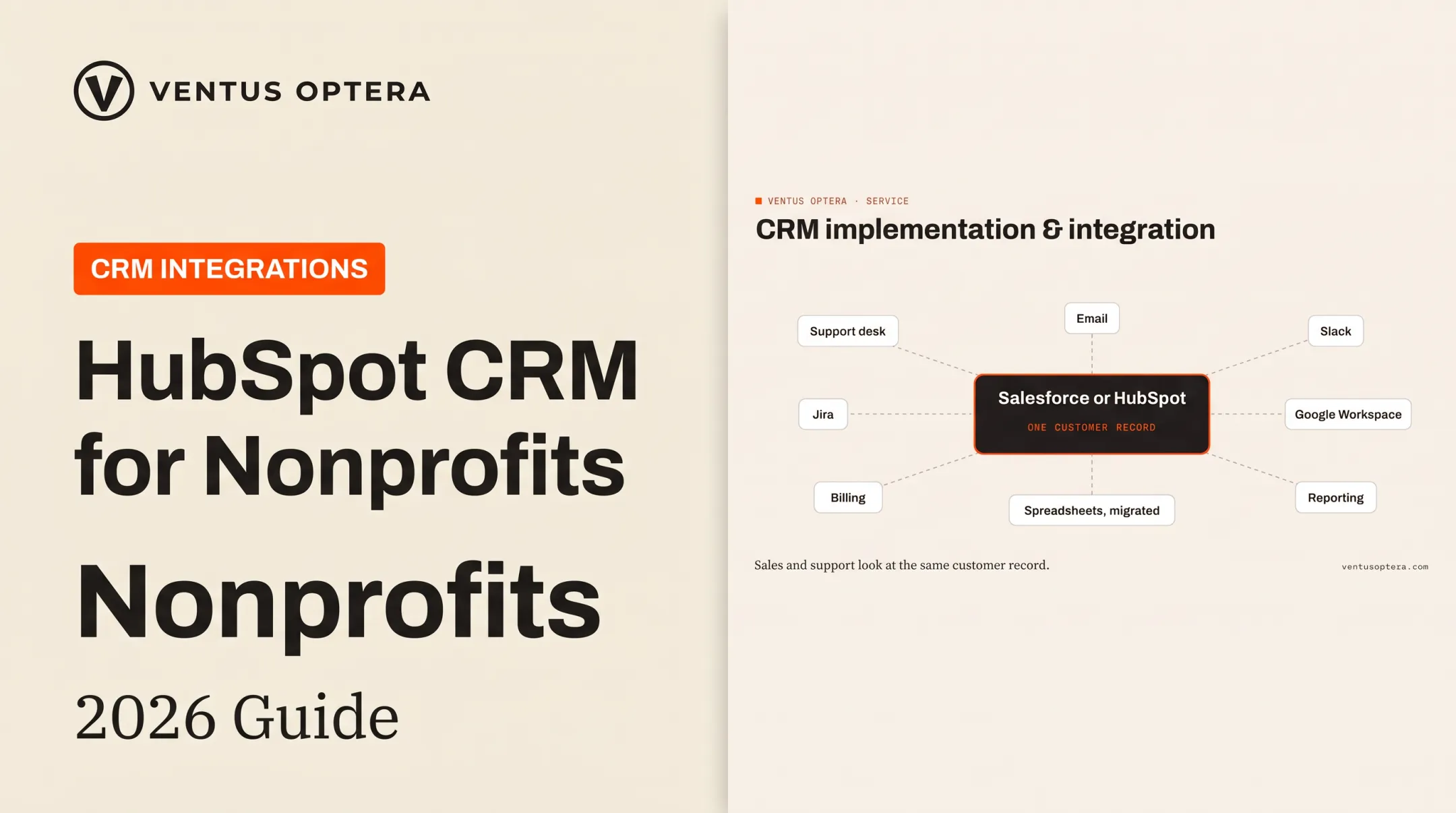
This is where quotes balloon. Deduplication, field mapping, lifecycle-stage decisions, and historical data all expand a migration's scope. So do integrations:
- Billing and invoicing systems
- Support desks and ticketing tools
- Advertising platforms
- ERP systems
- Internal communication tools (Slack, Google Workspace)
Native HubSpot configuration handles some of this. Anything requiring custom API work or middleware adds development time and cost.
Consultant Expertise, Delivery Model, and Urgency
Who you hire changes the rate as much as what you ask them to do:
- General administrators handle configuration and day-to-day portal work
- Specialist freelancers go deep in one area, often at a lower hourly rate
- Senior strategists price for architecture and judgment
- Agency teams offer breadth, with overhead built into fees
Solo specialists usually cost less per hour but have limited bandwidth. Compressed timelines, high response-time expectations, and compliance-heavy industries (healthcare, finance) typically push fees up.
Training, Documentation, and Ongoing Ownership
Hands-on training, written process documentation, and governance guidelines all add hours. They are also the difference between a system your team can run and one that breaks the month the consultant leaves. A consultant worth hiring leaves your team able to operate the portal without ongoing hand-holding.
Total HubSpot Cost Breakdown: Service Fees, Software, and Long-Term Value
The consultant's invoice is one line item. The full cost of adopting and running HubSpot includes several more.
Initial Discovery, Audit, and Planning
Before any build starts, expect one-time costs for:
- Requirements gathering
- Portal audit
- Process mapping
- A prioritized roadmap
A paid diagnostic (not a free sales call) is usually the right move when the portal is messy or the business objective isn't clear yet. A real audit produces a written plan you can act on, with or without the same consultant.
Implementation, Migration, Integration, and Configuration
This covers portal setup, data migration, pipeline and property design, workflow builds, dashboards, permissions, integrations, testing, and launch support. Common exclusions worth asking about upfront:
- Data cleansing beyond basic deduplication
- Copywriting for emails or landing pages
- Custom development work
- Third-party software licenses
- Change requests after sign-off
HubSpot Subscription and Connected-Tool Costs
Software costs sit entirely separate from service fees. Marketing Hub Professional currently starts around $800–$890/month with a $3,000 onboarding fee, per HubSpot's official pricing page.
Add seats, marketing-contact tiers, premium features, and connected tools (data warehouses, ad platforms, integration middleware), and the subscription line can rival or exceed the consulting fee. Pricing shifts with plan, billing term, contact volume, and add-ons, so confirm current numbers directly with HubSpot before budgeting.

Ongoing Administration, Optimization, and Support
Recurring work typically includes:
- CRM administration and data hygiene
- Workflow maintenance and reporting
- Campaign execution and training
- Quarterly roadmap planning
A solid retainer agreement specifies:
- Monthly capacity (hours or request volume)
- Turnaround times
- Communication channels
- Strategy time versus execution time
- What's explicitly out of scope
Lower-Cost Versus Higher-Cost Engagements
A budget engagement trades speed and documentation depth for a lower rate. That tradeoff works for a narrowly scoped task. A premium engagement costs more and typically includes stronger documentation, deeper strategic involvement, and lower risk of rework.
Higher fees are usually justified when you face:
- Complex integrations
- Poor data quality
- Mission-critical reporting
- A compressed deadline
Build, Buy, or Extend the System
Sometimes native HubSpot configuration or an off-the-shelf integration solves the problem. Other times the workflow does not fit the platform, and the business needs a custom API, dashboard, or owned application alongside HubSpot.
That decision is where Ventus Optera often starts. As an operations and product firm (not a HubSpot-certified implementation partner), it helps small and mid-size businesses choose among better CRM configuration, a custom integration, or software they own outright.
How to Estimate the Right HubSpot Consultant Budget
Start with the business problem, not the pricing model. "We need faster lead routing" or "our reporting doesn't match reality" points to a very different scope than "we want a retainer."
Build a Written Scope First
Before requesting quotes, document:
- Which Hubs are involved and which teams use them
- Data sources that need to connect or migrate
- Required deliverables (dashboards, workflows, integrations)
- Internal responsibilities: what your team handles versus the consultant
- Deadline and training needs
- Definition of success: the metric that tells you it worked
Request Comparable Proposals
Ask every bidder to separate discovery, implementation, software costs, third-party tools, ongoing support, assumptions, exclusions, and change-order rates. A single bundled number is hard to compare and easy to misjudge.
What Most Buyers Miss
The upfront price is rarely the full story. Watch for:
- Data cleanup that wasn't quoted separately
- Internal staff time spent on testing and training
- Subscription commitments locked into annual terms
- Maintenance after launch
- Rework costs from rushed or undocumented builds
Those hidden costs also shape the engagement model. Estimate your recurring monthly demand before you lock in a retainer. If requests pile up weekly and strategy needs regular attention, a retainer usually pays for itself. If work is sporadic, project pricing fits better.

Before you sign, confirm ownership and exit terms:
- Portal access and documentation
- Workflow logic and custom code
- Data exports
- Process for moving work in-house or to a new provider
A consultant who can't hand that over cleanly is a liability, not a partner.
If the real issue may be broader than a HubSpot configuration (fragmented spreadsheets, disconnected tools, or a CRM that doesn't match how you sell), an independent workflow assessment is worth the conversation. Ventus Optera looks at this from an operations and systems-integration angle, not as a HubSpot-certified reseller. That matters when the honest answer is "buy a lighter tool" or "build something custom," not "configure HubSpot harder."
Conclusion
HubSpot consultant pricing swings widely because the underlying work does too. Scope, technical complexity, data condition, strategic depth, and how much ongoing ownership your business needs all shape the final number, far more than any single hourly rate.
The right budget is the one that leaves you with a usable, documented, maintainable system and a clear path to measurable operational value. Before you sign, confirm your team can run what gets built after the consultant moves on, and that the quote spells out scope, deliverables, and ownership in writing.
Frequently Asked Questions
How much does a HubSpot subscription cost?
HubSpot software pricing is separate from consulting fees. Marketing Hub Professional starts around $800–$890/month plus a one-time $3,000 onboarding fee; plan, seats, and contacts change the total—confirm on HubSpot's official pricing page.
How much does a digital marketing consultant charge?
Rates depend on specialization, experience, and scope (strategy, campaign work, or HubSpot implementation). General freelance digital marketing rates run roughly $50–$175/hour by seniority.
How much does a HubSpot consultant charge per hour?
Hourly HubSpot consulting in the U.S. typically runs $120–$250/hour, depending on region, seniority, and task complexity. Technical integration sits at the higher end; basic configuration sits lower.
What is the typical cost of a HubSpot implementation?
Basic onboarding runs $3,000–$7,000, while complex implementations with migration, integrations, and customization can reach $25,000 or more. The exact cost depends on the number of Hubs, data volume, and training needs.
Should I hire a HubSpot consultant hourly, by project, or on a retainer?
Use hourly pricing for small, clearly defined tasks. Choose project pricing for outcomes with a clear beginning and end, like a migration. Pick a retainer when you have recurring administration, optimization, or strategic needs month after month.