Agentic AI is different. These systems don't just respond, they act: pulling account data, issuing refunds, updating CRM records, and closing the loop without a human touching the ticket. Gartner forecasts that agentic AI will autonomously resolve 80% of common customer service issues by 2029, cutting operational costs by 30%. That's a projection, not a current result, but it signals where the industry is headed.
This article breaks down how agentic AI actually works, where it outperforms chatbots and copilots, and how to implement it without breaking trust or compliance.
Key Takeaways
- Agentic AI perceives, reasons, acts, and verifies outcomes; chatbots only follow scripts
- Gartner projects 80% autonomous resolution of common issues by 2029; plan toward it, don't assume it today
- Read-write tool access (refunds, account updates) separates agentic systems from basic copilots
- Clean CRM data and API access are prerequisites, not afterthoughts, for autonomous support
- Human escalation paths remain essential: 87% of customers still want access to a person
What Is Agentic AI in Customer Support and Service?
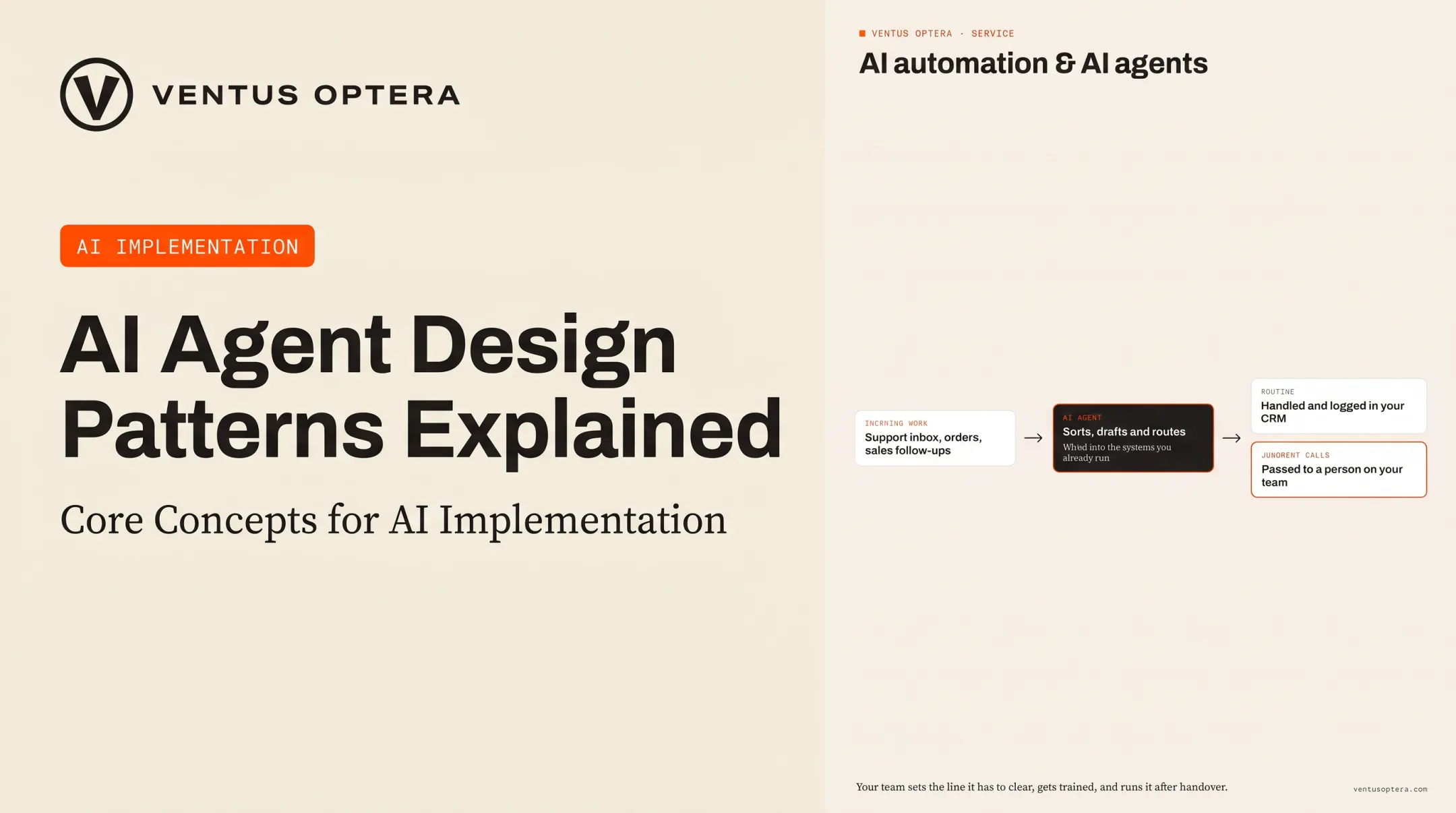
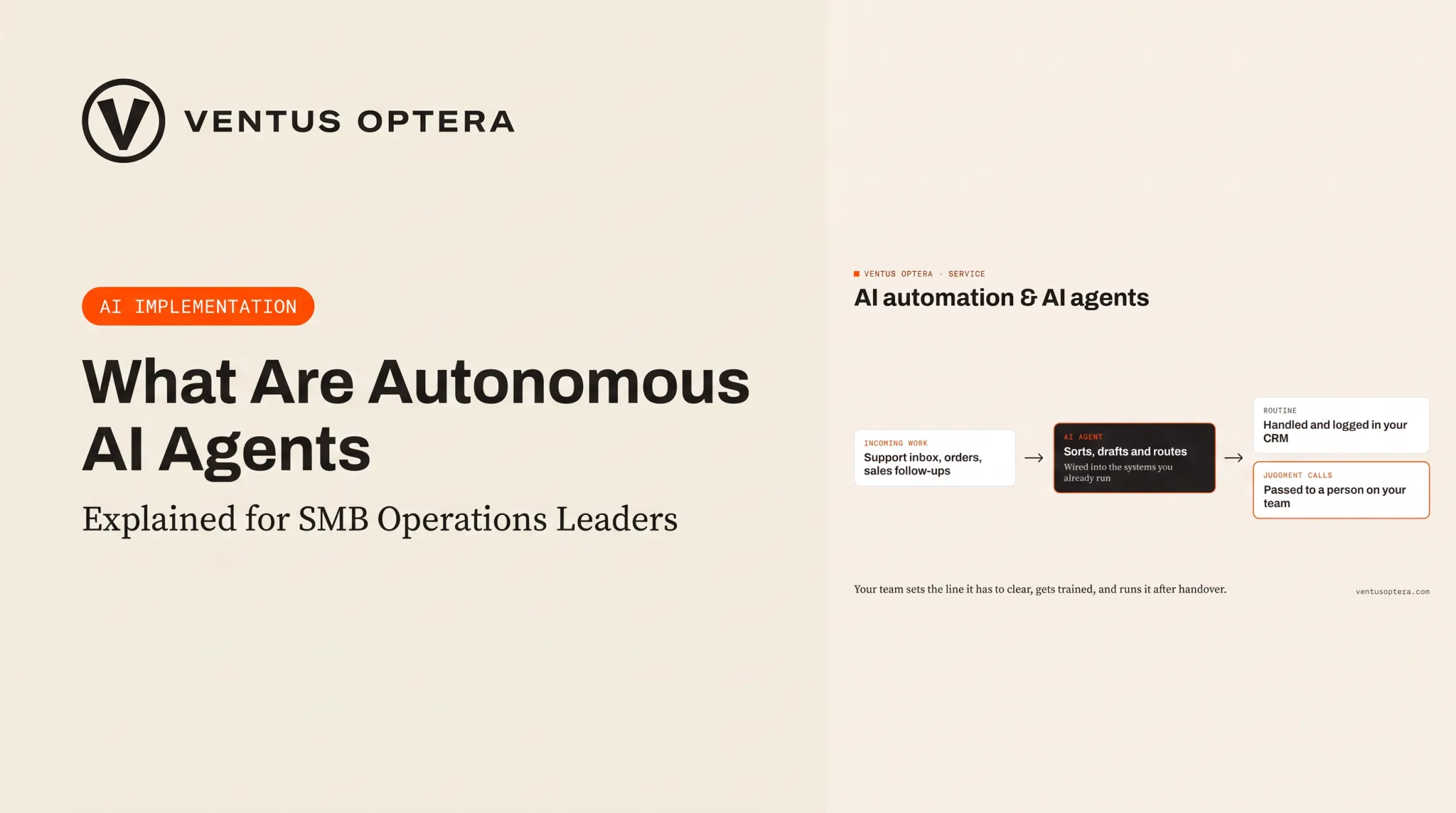
Agentic AI refers to autonomous systems that perceive customer intent, reason through multi-step workflows, execute actions across connected tools, and confirm the outcome before closing the loop.
Anthropic draws a sharp line here: a predefined workflow follows fixed steps, while an agent dynamically decides its own process and which tools to use.
Zendesk describes this distinction practically. Traditional customer-service bots answer a question and stop. Agentic systems reason across multiple steps and take action inside the underlying business systems, which is the part that actually resolves the customer's problem.
The contrast matters:
- A reactive chatbot tells a customer their refund policy
- An agentic system checks the order, confirms eligibility, processes the refund, and sends confirmation
That's the shift from static deflection to autonomous execution. Gartner's projection that AI will resolve 80% of common customer issues by 2029 depends on that same foundation: read-write integrations into business systems, not another chat widget layered on top of existing tools.
How Agentic AI Works: The Perceive-Reason-Act-Reflect Loop
Agentic systems run on a continuous cycle. Each stage shows where basic chatbots stop and real support agents keep going.
The Four-Stage Operational Architecture
- Perceive: Ingest requests from email, chat, voice, or SMS, then extract intent and entities such as order numbers, account IDs, and dates
- Reason: Use a foundation model to plan steps and choose which tools or data sources to call
- Act: Execute through tool calling against APIs for CRMs, billing systems, or ticketing platforms
- Reflect: Verify the goal was met, or escalate when it was not
Tool calling is the mechanical backbone. In OpenAI's and Google's documentation, the model does not execute anything itself. It returns a function name and arguments; your application code runs the lookup or action, then sends results back.
The Model Context Protocol (MCP), introduced by Anthropic in late 2024, standardizes that handoff. Agents can request resources and tools through one consistent interface instead of a custom integration for every system.

Short-Term vs. Long-Term Memory in Support Workflows
Support agents need both memory layers:
- Short-term memory: The active thread—what the customer just said and what they need in this moment
- Long-term memory: Unified customer records such as purchase history, prior tickets, and account tier
Those records only help when systems stay in sync. When Salesforce, HubSpot, and Zendesk share a connected customer profile, teams enter the record once and everyone sees the same history. That is what lets an agent say "I see your package was delayed last month too" instead of making the customer repeat themselves.
Tool Integration: Read-Only Querying vs. Read-Write Execution
This is where most "AI support" projects stall:
- Read-only: Summarize order status, shipping estimates, or account tier
- Read-write: Issue a refund, update a billing record, or change account status
Uber's R2D2 investigations program (2014–2017) built automated cancellation refund logic into a Slackbot. That is read-write execution, not a lookup. You need clean data infrastructure and reliable API access to reach that point. Without it, an agent can describe a problem but cannot solve one.
Before you roll out agents, map which systems allow safe write actions and which should stay query-only—the same API and workflow assessment Ventus Optera runs when implementing support automation for growing teams.
Agentic AI vs. Generative AI vs. Traditional Chatbots
These three categories get conflated constantly, and the confusion costs businesses real money in misallocated budgets.
| Dimension | Rule-based chatbot | Generative AI copilot | Agentic AI |
|---|---|---|---|
| Reasoning | Scripted flows only | Drafts responses, suggests actions | Multi-step planning toward a goal |
| System access | Must be hard-coded per flow | Limited to approved, human-directed actions | Can execute authorized actions across systems |
| Memory | Scripted conversation state | Prompt and session context | Persistent customer history and context |
| Human role | Monitors occasionally | Reviews and approves suggestions | Handles exceptions and escalations |
Comparing Support Technologies Across Autonomy and Execution
Basic chatbots create friction that costs more than it saves. Zendesk draws a clear line between deflection (avoiding a human-assisted ticket) and resolution (the customer's actual problem got solved). A chatbot that answers a question but leaves the underlying issue unresolved just pushes the customer back into the queue later, often angrier.
Agentic systems are judged on a harder standard: first-contact resolution (FCR). Did the issue actually close, with no repeat contact?
The Communication Layer vs. The Execution Engine
Hitting that FCR standard takes more than a better chat interface. It takes systems that can finish the work.
Two layers often get sold as one product:
- Communication layer: the chat or voice interface customers talk to
- Execution engine: the decision logic and API calls that do the work
The best architectures pair a conversational front-end with a specialized execution backend. A multi-agent setup might run a billing sub-agent, a technical sub-agent, and an orchestrator together. The customer just sees one smooth conversation.
5 Types of AI Agents and High-Impact Customer Support Use Cases
Not every support task needs the same kind of agent. Here's how the main categories map to real work.
Reactive Resolution Agents
These handle high-volume, structured requests end-to-end: refunds, password resets, order cancellations.
Klarna's AI assistant handled 2.3 million conversations in its first month, about two-thirds of its total service chats. Customers completed those tasks in under two minutes, versus 11 minutes previously.

Proactive Outreach Agents
These monitor telemetry, shipping logistics, and billing schedules to resolve problems before the customer even calls. Common plays include shipping-delay compensation issued automatically, and renewal notices sent with account-specific context.
Agent-Assist (Copilot) Agents
Copilots augment human reps rather than replacing them. They surface knowledge base articles, suggest next-best actions, and draft responses in real time.
A National Bureau of Economic Research study of 5,179 support agents using an AI suggestion tool found a 14% average increase in issues resolved per hour. The human agent still decided whether to use each suggestion.
Orchestrator Agents and Multi-Agent Networks
Complex requests often cross departments. An orchestrator routes a single customer issue across billing, technical triage, and CRM-update sub-agents, then stitches the results into one coherent resolution for the customer.
Tier-1 Technical Troubleshooting and Diagnostics
These agents run automated checks, verify device configurations, and execute guided fixes without a handoff. The same diagnostic layer can catch risk early: iAdvize's live-chat sentiment analysis, deployed for Samsung during the Galaxy S20 launch, flagged at-risk customers in real time and routed them to senior agents before frustration became a lost sale.
Step-by-Step Implementation: Building an Action-Oriented Support Engine
Rolling out agentic AI without a plan usually ends with an expensive chatbot. Here's a more disciplined path.
Step 1: Map the Support Interaction Landscape
Catalog interactions by volume, average handle time, escalation rate, and CSAT. This tells you where automation pays off fastest, usually high-volume, low-complexity requests first.
Step 2: Apply the AI Service Autonomy Matrix
Evaluate tasks on two axes: stakes (financial, legal, emotional risk) and repeatability (how structured the process is). This produces four zones:
- Full Automation: low stakes, highly repeatable (password resets, order status)
- AI-First with Monitoring: moderate stakes, repeatable (standard refunds, plan changes)
- Agent-Assist: higher stakes or less structured (billing disputes, complex troubleshooting)
- Human-Led: high stakes, low repeatability (legal complaints, account closures with emotional weight)
Step 3: Modernize Data Infrastructure and API Connections
This is the unglamorous step everyone wants to skip, and it's exactly why so many AI pilots stall. Ticketing data, knowledge bases, and customer records need to be clean and accessible before an agent can act on them reliably. Priority work usually includes:
- Cleaning and unifying ticketing, CRM, and customer record data
- Connecting knowledge bases and help centers through stable APIs
- Automating cross-platform workflows so agents can take real actions
- Building an owned data layer instead of brittle point-to-point tool stitches
The Boston Dynamics Support Center is a useful reference point: Salesforce, Jira, and Paligo connected into one support center, with ITAR and US/EU compliance designed in from day one. Ventus Optera does this kind of groundwork for growing businesses—CRM integration, workflow automation, and systems clients fully own.
Step 4: Pilot Narrowly and Track Core Efficiency Metrics
Start with one low-risk, high-repeatability use case. Track:
- Autonomous resolution rate
- Escalation accuracy (did it hand off at the right moment?)
- Cost per contact
Gartner data puts self-service contacts at a median of $1.84, versus $13.50 for assisted contacts—a practical baseline for ROI before you scale beyond the pilot.

Guardrails, Governance, and the Human-in-the-Loop Model
Autonomy without boundaries is a liability, not a feature. Good governance and a well-designed human handoff aren't separate concerns; they're the same discipline applied at different stages of the conversation.
Input and Action Boundaries
Input filters need to sanitize sensitive data (PII/PHI), enforce multi-factor authentication before account changes, and keep the agent inside its authorized domain. On the action side, set hard caps before the agent can act:
- Cap autonomous refund amounts
- Block account deletions
- Require human sign-off on high-consequence changes OWASP's guidance on excessive agency is direct: limit available tools, their functions, and their permissions.
Output Verification and Audit Trails
Retrieval-augmented generation (RAG) grounds responses in actual account data rather than guesses, reducing hallucination risk. Pair that with:
- Mandatory AI-identity disclosure to the customer
- Complete audit logs for every automated action
- Clear escalation triggers when confidence drops HIPAA's Security Rule requires regulated entities to log and examine system activity involving protected health information. Treat that logging standard as a practical floor even if you sit outside healthcare.
Designing Context-Rich Escalation Protocols
A warm handoff means the human agent receives a structured summary: what the AI already tried, sentiment signals, and the exact point where it got stuck. No customer should have to repeat their whole story to a person after the AI reached its limit.
Redefining the Human Agent Role
Offloading repetitive tier-1 work doesn't eliminate the human agent; it changes the job. Experienced reps stop answering the same password-reset question forty times a day and start handling the cases that actually need judgment. Gartner's April 2026 survey found 85% of service leaders expanding human agent responsibilities, not cutting them, as AI absorbs repetitive volume. Customers still want that option. Gartner's 2026 survey of 3,566 customers found 87% consider human-agent access essential when a company uses generative AI for service. Agentic AI should widen what agents can handle, not remove the exit ramp.

Frequently Asked Questions
What is agentic AI for customer service?
Agentic AI is an autonomous system that understands customer intent, reasons through the steps needed to resolve it, and executes actions across backend tools like CRMs or billing systems, without requiring a human to complete the task.
How do businesses use AI for customer support?
Common deployments include tier-1 ticket resolution, automated billing updates, agent-assist copilots that draft responses, and intelligent routing across chat, email, and voice channels based on urgency and complexity.
Which AI is best for agentic tasks?
Models with strong reasoning and native tool-calling—paired with an orchestration layer—fit agentic workflows best. Capabilities change quickly, so test tool use, multi-step planning, and reliability on your real support tasks before you build.
What should businesses use agentic AI for?
Best fits include high-volume repetitive requests, order tracking, identity verification, proactive notifications, and account updates across connected systems. Save ambiguous, emotionally charged, or legally sensitive cases for human agents.
How does agentic AI handle sensitive customer data securely?
Through role-based access control, automated PII masking, SOC 2 or HIPAA-aligned compliance practices, and auditable logs of every action taken. None of these are optional extras. They're prerequisites for any production deployment.
Can small and mid-sized businesses implement agentic AI without enterprise budgets?
Yes. SMBs can start with modular, high-ROI workflows and custom API integrations on their existing CRM or help desk platform, rather than building large custom models from scratch. Narrow pilots on existing tools capture most of the value at a fraction of the cost.